
龙之战
LPL真顶流!三家官媒蓝V同下场 齐推Bin哥"整容"话题_我的网站

A |
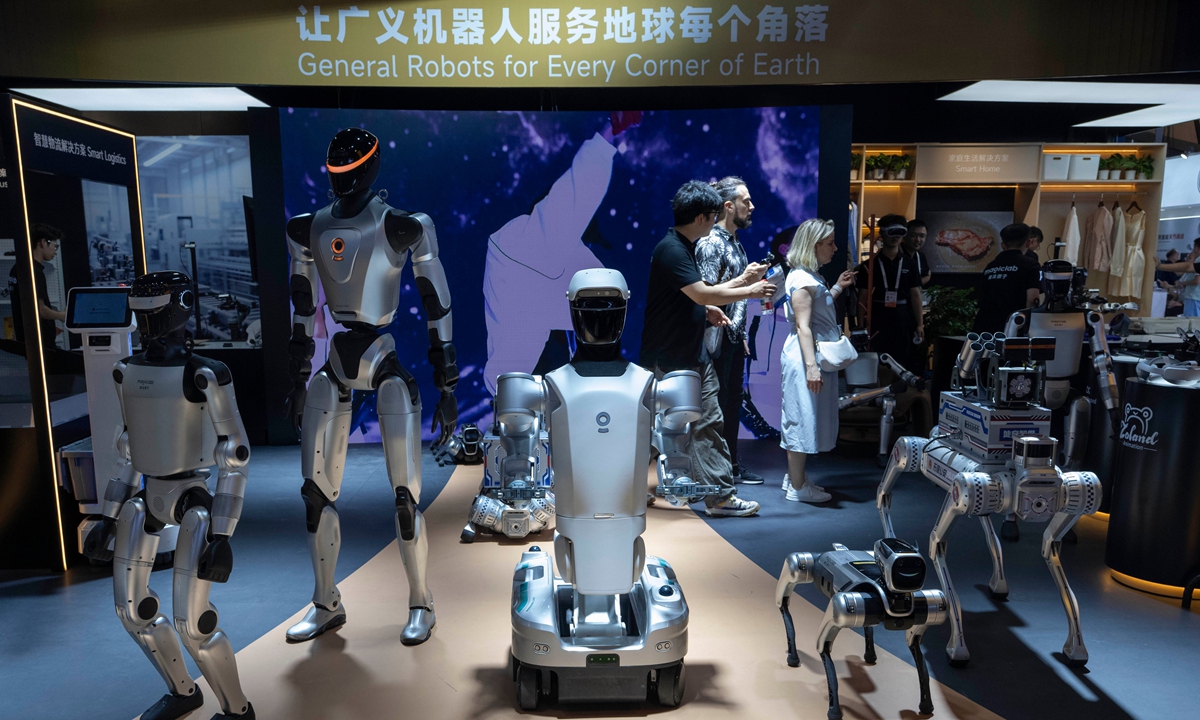
When machines begin to think, how should humans coexist with them? When algorithms participate in decision-making, how can security be ensured? When technology challenges ethics, how can governance keep pace? As the divide continues to widen, how can inclusiveness be achieved?
At the opening ceremony of the 2026 World AI Conference (WAIC) and High-Level Meeting on Global AI Governance, Chinese President Xi Jinping pointed out that we should always guide AI development with human wisdom and international consensus, so that AI can truly become a mighty force that increases the well-being of humanity and advances human civilization.
In the intelligent era, we share the same planet and must pull together. Standing at the forefront of the times and shouldering the responsibilities of a major country, China is advancing global AI governance in an all-round way, making it deeper and more substantive. From laying down the opening strokes through its own development, to the "broad-brush freehand" of top-level design, and then to the "fine-brush painting" of detailed implementation, China is working to make the dividends of technology benefit the world and to make the bottom line of security clearly visible. This is China's commitment to the world, and also humanity's answer to the future.
Building a solid foundation for governance through strength at home
Not long ago, Kimi K3, a new-generation large AI model developed in China, was released as open source and was made available for anyone to download. With 2.8 trillion parameters, it is currently the world's largest open-source model in terms of parameter count.
Kimi K3 is one member of the "China team" in the AI field that have attracted global attention. Six of the world's top 10 applicants for generative AI patents are headquartered in China. The Financial Times has noted that Chinese companies are joining the global front ranks in AI innovation while outperforming their peers in cost efficiency.
Since the 18th National Congress of the Communist Party of China (CPC), the Party Central Committee with Comrade Xi Jinping at its core has attached great importance to AI development, improving top-level design, strengthening work arrangements, and promoting an overall and systematic leap in China's comprehensive AI strength.
Data show that the adoption rate of AI technology among China's manufacturing enterprises above designated size has exceeded 30 percent, the core industries of the intelligent economy have grown to more than 1 trillion yuan (about $139 billion), the number of generative AI users has surpassed 600 million, and China has become the world's largest holder of AI patents. China has achieved notable results in AI technological innovation and industrial applications, with its overall strength significantly enhanced.
Standing at the new starting point of the 15th Five-Year Plan period (2026-30), China is consolidating the foundation for innovation through greater self-reliance and strength in science and technology and embracing the global opportunities through the "AI Plus" initiative. China is entering a prime opportunity to develop its AI.
This confidence comes from continuous breakthroughs in core technologies in key fields.
Zhangjiang Science City, where the Zhangjiang Science Hall exhibition area of the 2026 World AI Conference is located, is home to hundreds of companies for chip designing, manufacturing, packaging and testing, with the scale of the industry accounting for about one-fifth of the national total. In the chip sector, which has been affected by external shocks, China has not only blazed a new path through independent innovation and self-reliance, but has also firmly kept the initiative in AI development in its own hands.
"Computing power is the cornerstone of AI development and governance. It concerns not only technological breakthroughs, but also strategic initiative. Only by basing development on independence and controllability, while ensuring inclusiveness and accessibility, can we continuously strengthen the foundation for AI development," Moore Threads founder Zhang Jianzhong said.
This confidence comes from an increasingly vibrant innovation ecosystem.
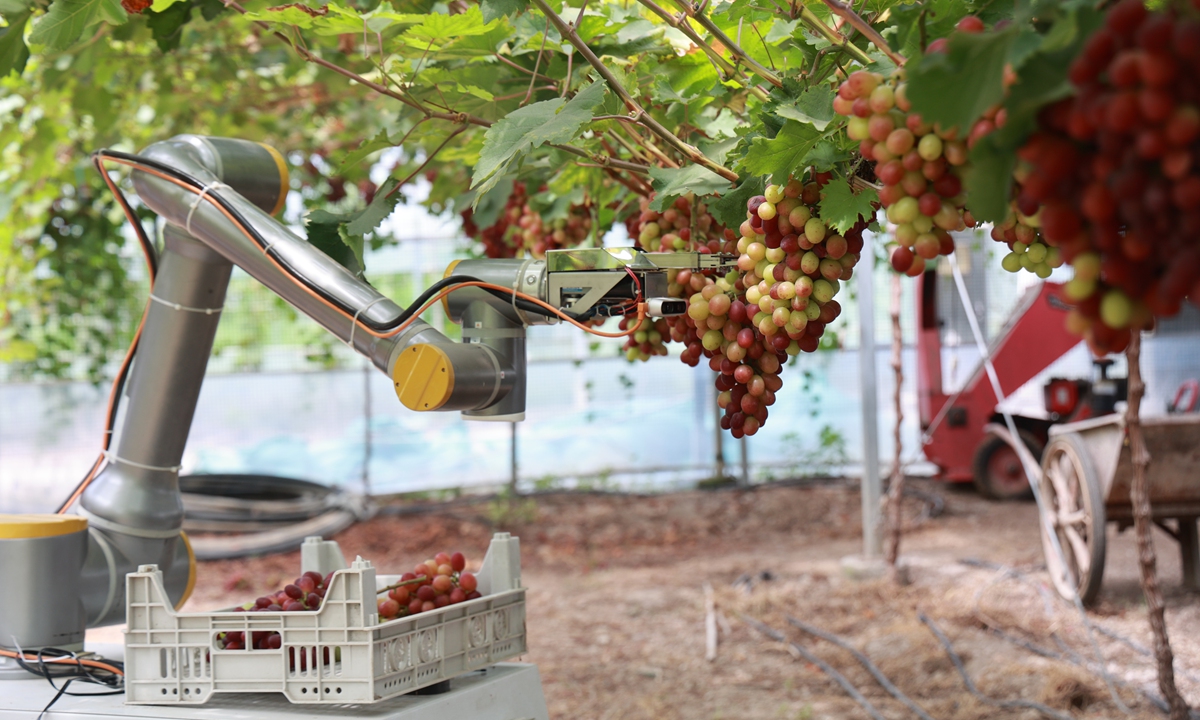
With strong support from scientific and technological innovation, AI is being integrated across all areas of China's economy and society, entering ordinary households and bringing tangible benefits to people's livelihoods, making "Intelligent Manufacturing in China" another shining calling card of Chinese modernization.
In Shunde, South China's Guangdong Province, and Wuhan, Central China's Hubei Province, after Midea's "AI agent factories" introduced SmartMore's AI visual reasoning platform, the pace of inspection came fully in line with the production rhythm. AI now directly participates in production decision-making, rapidly turning large models into productive capacity.
In Nanchong, Southwest China's Sichuan Province, and Bozhou, East China's Anhui Province, iFLYTEK Healthcare's "AI Medical Assistant" has significantly improved the efficiency and standardization of medical record writing through functions such as structured consultations and intelligent prompts.
A number of terminal device companies are relying on a well-developed industrial chain support system to accelerate the launch of new-generation products such as smartphones, intelligent robots and smart glasses, enriching market choices and creating new hot spots in information consumption.
On August 12, Chinese smartphone brand Honor launched the world's first Robot Phone.
"China has rich and diverse production and everyday-life scenarios as well as integrated software-hardware engineering capabilities, so this has provided excellent conditions for AI to be efficiently translated from needs into actual experience," Honor CEO Li Jian said.
This confidence comes from institutional guarantee that coordinates development and security.
Recently, Dongbi Tech Data, together with the School of Digital Economy at Shanghai University of Finance and Economics, released the Global Large Language Model Safety Evaluation Report (2026). Using 313 high-risk science and technology questions as the test set, the report assessed the security prevention capabilities of 38 large language models from China and abroad while helping users obtain, understand and use scientific and technological knowledge.
"Currently, society as a whole is paying close attention to issues such as content security and data security arising from the large-scale applications of AI. Balancing development and security, and advancing scientific and technological innovation in parallel with the rule of law in science and technology and the building of ethics and integrity, will further guide large models and the entire AI industry toward positive and beneficial development and sustainable growth," said Zhu Xufeng, dean of the School of Public Policy and Management of Tsinghua University.
In recent years, the State Council's Guidelines on Further Implementing the "AI Plus" Initiative have explicitly called for establishing and improving systems for AI technology monitoring, risk early warning and emergency response. The Implementation Guidelines on the Standardized Application and Innovative Development of AI Agents have also made clear that the development of AI agents should adhere to the basic principles of safety and controllability, orderliness and standardization, innovation-driven growth and application-oriented traction. China is accelerating efforts to build laws and regulations, policies and institutions, application standards and ethical guidelines that are suited to the evolving trends of AI, strengthening the security foundation for Chinese modernization and contributing Chinese wisdom and Chinese approaches to global science and technology governance.
Guiding AI governance with a global vision
A recent commentary from The New York Times likened the development of cutting-edge AI models to two divergent paths.
"The United States is behaving as though frontier A.I. models could be the equivalent of nuclear weapons, offering an immensely destructive form of power that requires a careful and jealous watch… Meanwhile, China treats the models that its companies produce as the equivalent of nuclear energy, a lower-risk technology to be shared and commercialized to win friends," read the NYT article.
At the heart of these two approaches lies a fundamental difference in how AI is perceived: Is it a strategic asset to be monopolized in a race for dominance, or a public good that should serve humanity?
China's answer is clear and unwavering: Put people first, ensure AI is used for good, and make it a powerful force for shared prosperity and common security.
Xi called for joint efforts to build a just and equitable system for global AI governance, the Xinhua News Agency reported.
This reflects a deeper understanding of technological and historical trends, promoting shared benefits through consultation and wisdom through good governance. It also demonstrates China's commitment to global AI governance, ultimately serving the vision of a community with a shared future for humanity.
Embracing openness and win-win cooperation to drive innovation and empower industries.
China has emerged as one of the world's most active and fastest-growing hubs for open-source AI models. Chinese open-source AI models have been downloaded more than 10 billion times worldwide, while open-source communities such as AtomGit have brought together more than 11 million registered users.
From topping global large-model leaderboards in certain performance metrics, to steadily advancing multimodal capabilities, and to evolving from single intelligent agents into agent clusters, China's large-model innovation and iteration have been accelerating at an unprecedented pace. This has not only given rise to a diverse array of intelligent application scenarios and unlocked new potential for domestic economic growth, but has also driven technological inclusiveness through advantages such as high performance and low cost. Chinese large models have become "productivity tools" favored by developers and users worldwide, as well as benchmarks in global model evaluations and important reference cases for overseas research institutions.
Openness and open source are more than just a technological development model. They embody a broader philosophy of collaboration and coexistence, as well as a commitment to sharing the fruits of development.
China has launched the AI+ International Cooperation Initiative, calling upon all countries to proactively carry out AI+ campaigns in light of their national conditions, enhance policy exchanges and practical cooperation, and share best practices and solutions on the basis of mutual respect and mutual benefit.
The Action Plan for AI Cooperation and Development sets out eight areas of action, including sharing open-source ecosystems, jointly developing rules and standards, strengthening cooperation on safety governance, and ensuring AI is used for good.
China has launched "Fenghe," a large language model for AI-powered meteorological services, and initiated a global open-source program.
Strengthening risk awareness to ensure AI remains safe, controllable and trustworthy.
With a deep understanding of the trends and logic of AI development, we are continuously improving laws, regulations, policies, mechanisms, application norms, as well as ethical principles to make sure that AI is safe, secure and controllable, and that this fine steed of AI gallops with both speed and stability, Xi said, according to Xinhua.
China has put forward the Global AI Governance Initiative, advocating risk-based assessment, stronger laws and regulations, and the development of ethical guidelines. It has called on countries to jointly prevent risks and continuously improve the safety, reliability, controllability and fairness of AI technologies.
China has also released versions 1.0 and 2.0 of its AI Safety Governance Framework, embedding safety requirements throughout the entire process of model development, deployment and application.
The Global AI Governance Action Plan has identified "safety and controllability" as one of its core principles; An international action plan on AI ethics governance has contributed a framework that is both principled and actionable to global AI governance... From defining directions to charting pathways, China continues to provide international public goods, ensuring that the "swift horse" of AI runs both fast and steadily.
Fostering inclusiveness and mutual learning to build a diverse and harmonious global civilization.
Dujiangyan tamed the Minjiang River without dams, nourishing the Chengdu Plain for over 2,000 years. Confucius taught that "Gentlemen seek harmony but not uniformity." Civilizations have their own paths, best pursued through mutual respect and coexistence.
Drawing on such Eastern wisdom, Lu Zilong, deputy chair of the World Intellectual Property Organization supervision committee, interprets China's coherent approach to AI governance.
Today, the Eastern wisdom is being translated into concrete initiatives. The "cultural interaction engine," developed by the institute for Long-term AI Research Center and the Institute of Automation of Chinese Academy of Sciences, uses AI to uncover links between world cultural heritage sites, presenting the shared values and diversity of human civilization to users in more than 170 countries and regions.
The Milan Winter Olympics has launched the first official LLM in Olympic history, powered by Qwen, a Chinese large model, serving both professional operations and public services, a new era of smart winter sports experiences.
Chinese and Malaysian companies have jointly established a multilingual AI translation center for ASEAN, supporting translations across more than 130 languages and enabling film and television content to be translated in as little as 30 minutes.
From cultural dialogue to sports, from language to human connections, Chinese AI is bridging distances, allowing civilizations to flourish through inclusivity and be revitalized through exchanges.
Promoting solidarity and improving global governance to prevent new historical injustices in the AI era.
During the 2026 WAIC and High-Level Meeting on Global AI Governance, the World Artificial Intelligence Cooperation Organization (WAICO) was established, with 38 countries becoming its founding members.
The blueprint laid out a year ago has now borne fruit. As the world's first intergovernmental international organization on artificial intelligence, WAICO is committed to AI for good and inclusive benefits, adheres to the purposes and principles of the UN Charter, and is open to all countries, charting a new course and coordinates for global governance in the age of intelligence.
China has sought to translate its sense of responsibility into concrete action. By upholding multilateralism, bringing the international community together and continuously seeking the broadest possible common ground on global AI governance, China is working to ensure that AI can truly become a valuable common asset of all humanity.
Looking to the future, fulfilling the responsibility of governance through action
Looking back at the summer of 1956, the spark of "artificial intelligence" was quietly kindled at a workshop at Dartmouth College in the US.
Over the past 70 years, AI scientists and researchers around the world have explored the unknown, moved forward through twists and turns, and achieved breakthroughs through perseverance, continuously expanding the boundaries of technology.
History has witnessed Chinese science and technology carving furrows out of barren ground and setting off from a faint glimmer of light. China has progressed from following behind to running alongside others and then to gaining the initiative on more tracks. Every rut and every milestone along the way has deepened its understanding of the power of technology, while also prompting clearer reflection on where the road ahead will lead and how far it can go.
Inclusive development for the benefit of all is the right path forward, and it is a path that grows broader as we travel further.
Remote control of pond aeration, round-the-clock online monitoring of water-quality parameters, precise feeding by drones... In Takeo Province in southern Cambodia, with support from an integrated smart farm development program implemented by China, an intelligent rice-fish farming model has significantly improved the survival rate and quality of local giant freshwater prawn seedlings. Annual income per hectare has increased from about $1,000 to more than $3,000, bringing real increases to the incomes of local farmers.
In Saraburi Province, Thailand, the Chinese-developed "YUKON" system has equipped a traditional mining area with a "digital brain." From excavators to mining trucks, and from power monitoring to transport routes, this parallel mining operating system, based on an AI large model, can make the optimal allocation of equipment across the entire mine within milliseconds. Efficiency has risen by 16 percent and electricity consumption has fallen by 20 percent.
SCG International General Manager Jirapat Janjerdsak said, "China's AI technology has shown us the possibility of achieving a mine with 'zero casualty, high efficiency and low emissions.'"
Along the Red Sea coast, as the tide recedes, sediment samples are collected into containers. Through China's AI-powered marine drug intelligent screening platform, they become a "seed bank" for new antibacterial agents.
At Djibouti's Doraleh Multi-Purpose Port, extreme weather such as high temperatures, short bursts of heavy rain and sudden strong winds frequently causes disruptions. MAZU, an AI-powered meteorological early-warning solution from China, has helped establish a full-chain early-warning system covering "monitoring, forecasting, warning, services."
Helping safeguard countless homes and protect peace and safety far and wide, Mohamed Ismail Nour, director general of the Djibouti National Meteorological Agency, said, "Djibouti hopes to steadily advance its economic and social development by drawing on Chinese technologies."
To bridge the digital and intelligent divide, it is better to teach people how to fish than simply give them fish.
Data from the International Telecommunication Union show that about one-third of the world's population still has no access to the internet. The World Bank's Digital Progress and Trends Report 2025: Strengthening AI Foundations shows that low- and middle-income countries lag far behind high-income economies in both the number of AI systems and available computing capacity; a survey by the African Data Centres Association has found that most of the world's data center capacity is concentrated in developed economies, with Africa accounting for less than 1 percent.
Without coordinated intervention, disparities in AI development may further evolve into a digital and intelligent divide, or even a North-South divide, posing new challenges to global development.
China has held AI capacity-building workshops, launched a special cooperation program on AI science and technology innovation under the China-proposed Belt and Road Initiative, developed the "Digital South" brand under the Global Development Project Pool and established the China-ASEAN AI Industry Innovation Center… A series of pragmatic measures have crossed mountains and seas, using Chinese expertise to help countries, particularly those of the Global South, strengthen their capacity building.
The great road takes us far when traveled together; working together, we embark on a new journey. China has announced that over the next five years, it will provide developing countries with 5,000 opportunities in AI training and seminar programs; develop international AI application cooperation centers with the ASEAN, the League of Arab States, the African Union, the Community of Latin American and Caribbean States, the Shanghai Cooperation Organisation and BRICS; and promote the applications of the MAZU AI-powered meteorological early-warning solution in 30 countries.
Standing at a new historical starting point, China is willing to work with all parties with a more open approach, more pragmatic action and a longer-term vision, to seize the opportunities and address the challenges brought by AI development, creating a better future for human society.
This was compiled and translated by the Global Times based on an article originally published on Page 1 of the People's Daily on August 13, 2026.
。 近日,话题 #网友细扒 Bin 脸部变化细节 #登上社交平台热搜,三家媒体联合助推相关讨论,让 BLG 战队上单选手 Bin 的颜值变化话题再度升温,讨论热度从电竞圈层逐步向大众领域扩散。 事件缘起于 Bin 结束休整回归大众视野后,外形气质的明显反差引发网友热议,“整容” 的猜测一度流传,后续有爆料澄清其仅在休整期间做了牙齿调整。 随着讨论深入,不少网友开始逐帧对比 Bin 过往与近期的公开画面,拆解面部变化的细节:有网友指出,其侧脸下颌线线条较此前更为流畅,面部轮廓的收紧感与牙齿矫正后咬合关系的改变高度契合,同时整体面部平整度提升,也符合整牙对面部软组织带来的连锁影响。 本文由游民星空制作发布,未经允许禁止转载。更多相关资讯请关注:英雄联盟专区。
Current article:http://ftoh827.zhouangnaoguangsundianzhenmou.cfd/list_sfl/heathbc.html
Published on:04:15:50
相关新闻
- 急跌反转,震动来自哪里?
- 三伏天跑步,主打4个“认怂”
- 曲江文旅2026年上半年净利润681.28万元,扭亏为盈
- 菲律宾又搞事情!拉拢域外国家搞"7天联合巡航",南部战区发声了!,兵器集中营,原创 菲律宾又搞事情!拉拢域外国家搞"7天联合巡航",南部战区发声了!
- 「参政党」でも「れいわ」でもなく「高市首相」がSNSで独り勝ちした理由…有権者の心を鷲掴みにする「庶民宰相」との共通点とは
- 境外间谍入侵未报废旧服务器窃密,国安机关最新披露
- 多地国补暂停?国补结束了吗?国补政策2025最新消息公布:国补政策2025全国统一持续到12月31日截止
- 未来三年,Facebook将投资3亿美元帮助全球新闻机构。
- 搜查近6小时!检调单位带走陈雪生胞弟等3名助理以及4箱证物
- 土媒渲染“反土铁三角”,印度被卷入以土对抗,新德里无意选边站,止戈军是我,原创 土媒渲染“反土铁三角”,印度被卷入以土对抗,新德里无意选边站
最后更新
- 雷军详解新一代玄戒芯片原型机,包括高速 AI 演示终端和个人 AI 超级计算终端
- Flight to Florida returns to Panama over a suspected bomb that turns out to be an adult diaper
- 锁定万亿订单就能躺赚?这可能是AI产业链条上最大的“伪命题”!
- 老旧小区焕新颜 居民幸福再升级
- 韦东奕带货卖书又匆忙撤下,是什么让他压力如山?
- 文明何以润泉城
- 8月26日集合竞价:海鸥住工、中南文化3连板
- 济南购彩者喜中顶呱刮“十倍幸运”头奖25万元
- 加拿大民众:华盛顿恶霸一直打我们,我们不会忍气吞声
- 深圳市大规模“清理”垃圾和共用自行车
热门新闻
- Salman Khan to Drop Battle Of Galwan Teaser on His 60th Birthday Tomorrow
- Aamir Khan Opens Up on Choosing Films With Social Issues: "I Broke Every Rule..."
- 锦龙股份计划“清仓” 东莞证券距离全国资已不远?
- 押金100元:红米注7手机系列开放预订22件
- GT Voice: Bridging digital gap to be decisive factor in global AI competition
- 吉林福彩“快乐8”游戏促销活动来袭
- 施罗德:2023世界杯夺冠之后 我的生涯再无遗憾
- データで見る冬アニメ、今期は“続編”が強すぎ?それでも注目を伸ばす新作、そして“ダークホース候補”とは
- 16岁业余球手登顶杭州国际高尔夫球锦标赛
- 台当局阻挡民间采购疫苗细节曝光 舆论批抗疫夹带政治考量_台湾_民众